
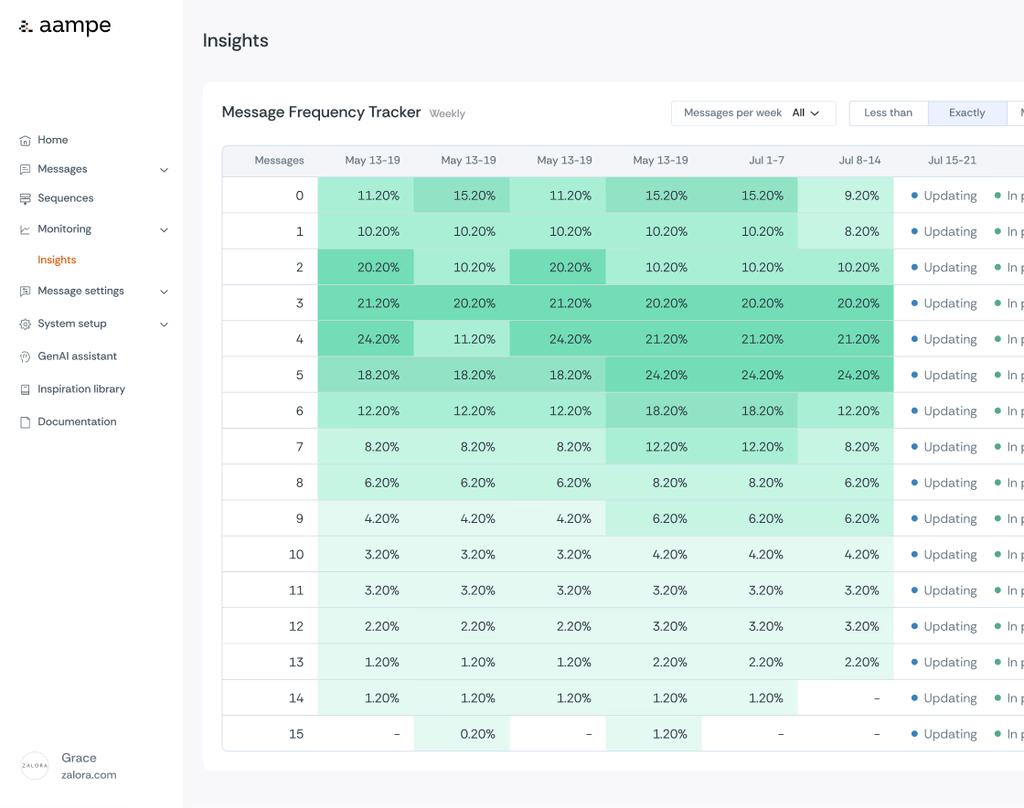
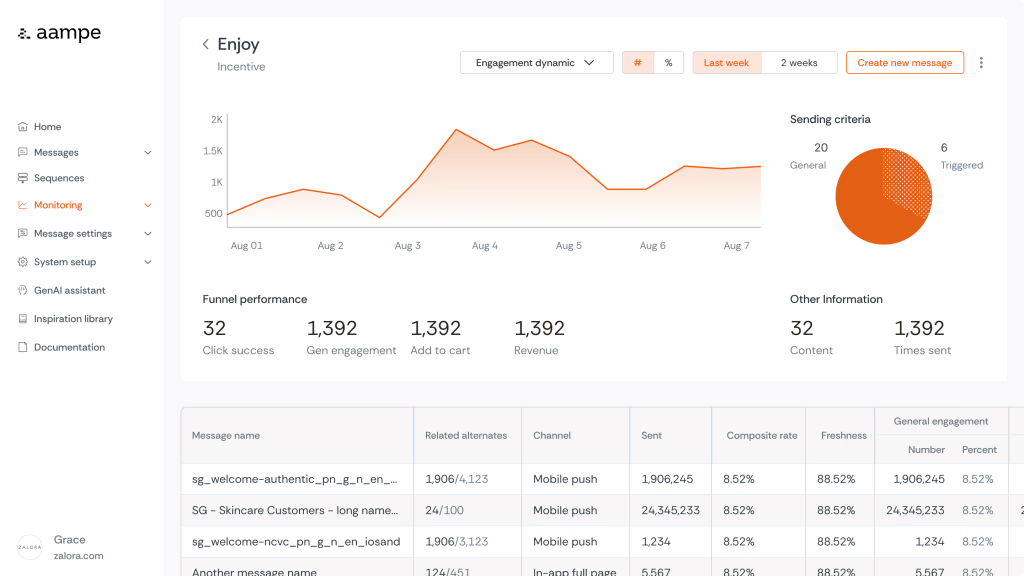
Why CTR Is No Longer a Northstar Metric

For years, Click-Through Rate (CTR) was a North star for customer engagement: a clean, simple number that told us how many people “engaged.” It fitted neatly into dashboards and reports. To answer the obvious question, yes, 100% you should still measure CTR. However, to do it with the knowledge that in 2025, the link between […]
The Hidden Costs of Manual Experimentation (And Why Agents Solve Them)

Marketers today don’t talk enough about the true cost of experimentation. It isn’t necessarily the dollar amount or the cost of the tool license. What I’m referring to is the hidden operational cost. In other words, the “tax” your team pays everyday just to keep experiments running. Taking a deeper dive into this, I would […]
How Aampe Handles High-Volume Data Ingestion Without Breaking the Bank
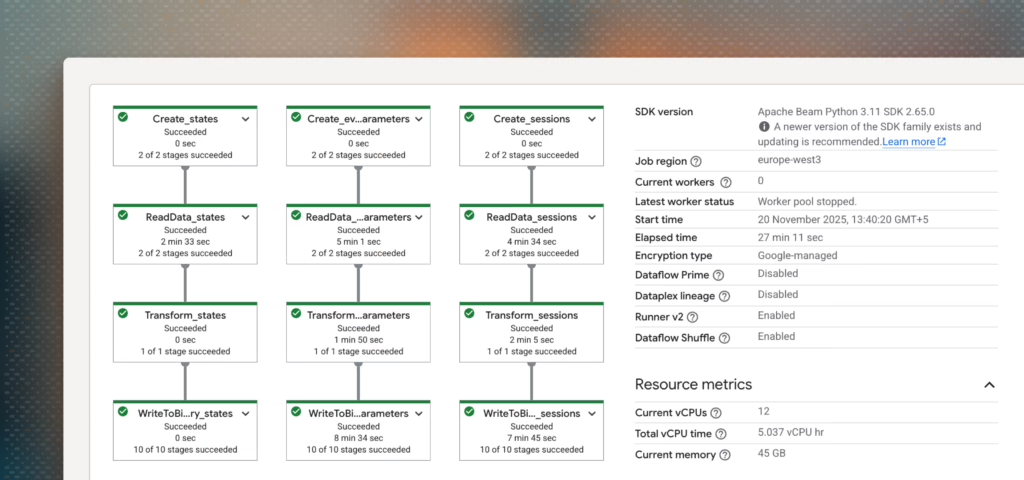
Introduction Agentic AI enables businesses to unlock massive amounts of value for their customers. In some cases, that involves solving conventionally familiar problems so that agents can focus on harder learning problems. For example, Aampe enables businesses to provision and manage an agentic learning agent for every one of its customers. Those agents need to […]
Agentic AI and Black Friday: The Future of Real-Time Personalization

Every year, Black Friday exposes the same truth about retail apps which is that relevance isn’t a nice-to-have anymore. In fact, it can be the difference between a user who converts and a user who churns. And this distinction is important, given that Black Friday 2024 set a record with $10.8B in online spending in […]
From Campaign Chaos to Continuous Learning: A 10-Step Guide to Change Management for Modern CRM and Product Teams

Change rarely starts with technology.It starts with realizing that the way we’ve always worked no longer scales. For CRM and product managers, that realization usually hits somewhere between your fifth “urgent” campaign and your fiftieth “quick A/B test.” You’re juggling audiences, journeys, and segments that all blur together and yet every iteration feels like starting […]
Why CRM Teams Don’t Lose Control with Agentic Infrastructure

Most CRM practitioners think adopting Agentic Infrastructure means giving up control. No more defining user segments or setting up rules-based campaigns. That’s a difficult pill to swallow — but the reality is that the “control” CRM teams think they have today is already an illusion. Campaigns and segments were never instruments of control; they were […]
Contextual bandits and how learning systems actually behave

Contextual bandits are a great idea in general. It’s just that they’re usually implemented to make several specific, poor decisions. Contextual bandits are one of the workhorses of modern decisioning. They show up in marketing, recommendations, ranking, and experimentation systems because they solve a simple problem: you have several things you could do, you do […]
Context Is a Verb: Context Graphs and Agentic Infrastructure
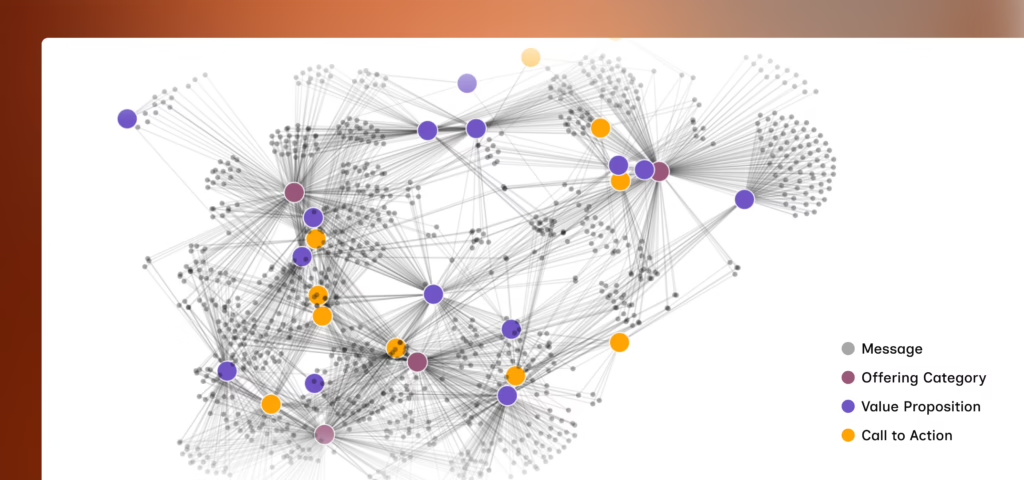
There’s a lot of excitement right now around context graphs — designing agentic systems to capture the “why” behind decisions, not just the “what.” The promise is compelling, but it assumes the “why” already exists somewhere to be captured. Where I differ is in how that “why” actually gets learned. In agentic systems operating in […]
Message Structures: Giving Agents More Choice
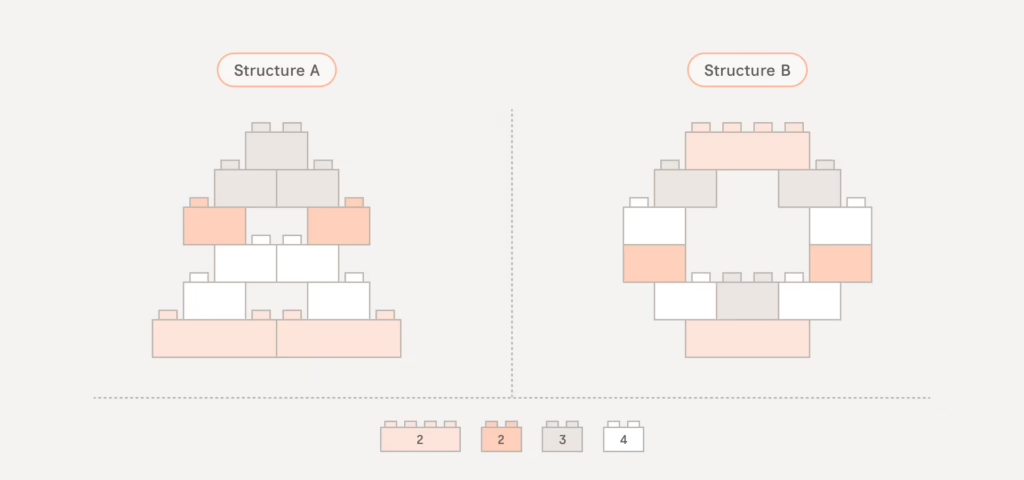
When teams experiment with messaging, the focus is usually on the words used. We debate phrasing, test benefits, tweak tone, and refine calls to action. All of this matters, but it often misses a quieter, more influential factor: the structure of the message. Message structure is the order in which ideas appear, which elements are […]
How can marketers deliver customer experiences just as personalized as Netflix’s movie recommendations?

What do the most personalized digital experiences in the world actually have in common? Think about Netflix’s “Top Picks For You” section.Think about Spotify’s “Discover Weekly” playlist. They don’t just have a lot of content. They have structure. More specifically, they’ve built deep semantic layers: thoughtfully designed labeling systems that describe content in ways machines […]