Agentic Infrastructure

Making conversation the core of customer engagement
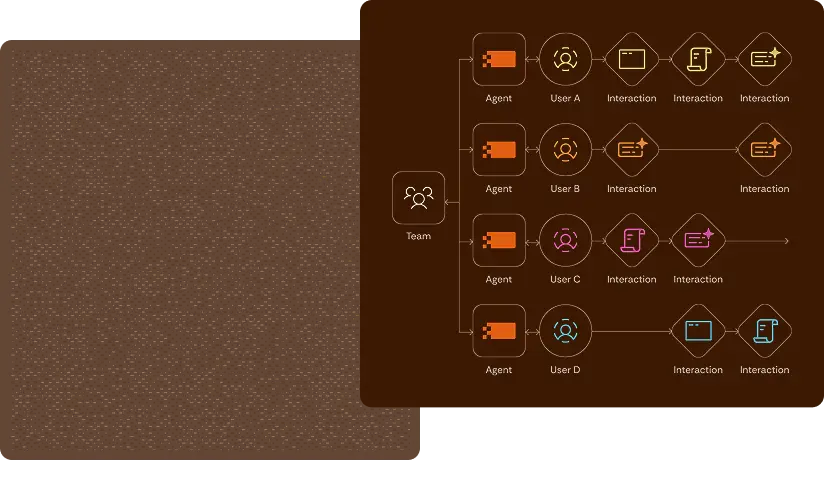
Agentic infrastructure moves beyond prompt-and-response systems — creating networks of agents that learn from experience, remember outcomes, and evolve with every user.

The Problem

Customers are treated as transactions

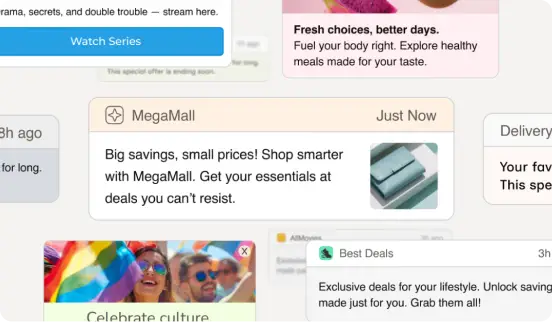
Customers want to be treated like humans, not transactions. People know when they’re being gamed. Endless notifications, fake personalization, and manipulative nudges make them feel used, not understood. What they actually want is simple: respect for their time, intelligence, and goals. They want interactions that feel real — not optimized.
The Old Playbook

Most systems still see people as data

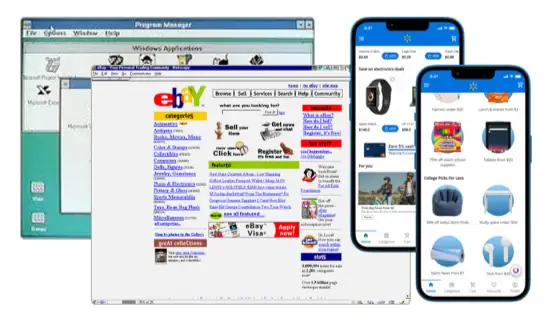
Traditional engagement tools focus on orchestration — mapping data to messages, predicting clicks, optimizing funnels. The customer barely exists in that loop. These systems automate delivery, not understanding. They make businesses busier, not wiser, and leave users feeling like line items in a spreadsheet.
The Future

True engagement needs real conversation

Every business has people who know what matters to the brand. Every customer has goals of their own. When those two sides can actually talk — learning from each exchange — alignment happens naturally. Technology should make that conversation scalable, not replace it. That’s what agentic systems are built to do.
The Agentic Purpose

Stay on topic and on brand
but not on script

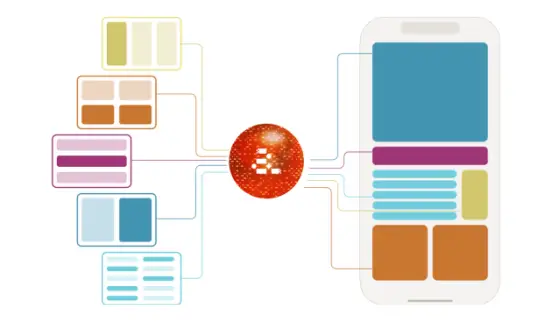
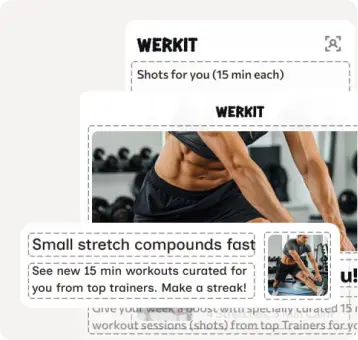
Agentic infrastructure assigns one dedicated agent to every customer who pays attention to every button click and page view, not just conversions or landing page activity. Each agent learns, adapts, and responds as a true extension of the brand team’s headcount.
Reasoning through impact

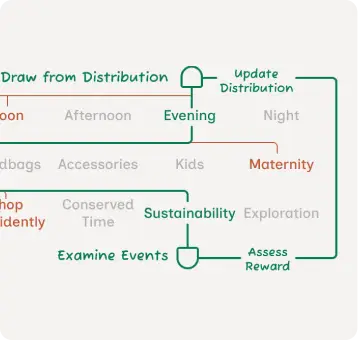
Agents don’t just notice patterns; they infer causal effects, learning which actions genuinely move a customer closer to their goals.
Connective abstraction layer

Agents consolidate what they learn into higher-level concepts - themes, tones, value propositions - so they can transfer insight across sessions instead of starting from scratch.
Coordinating as a collective

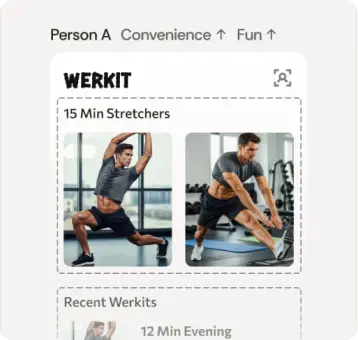
While every agent serves one person, they share insights across the network - spreading what works without losing individuality.

Agentic AI

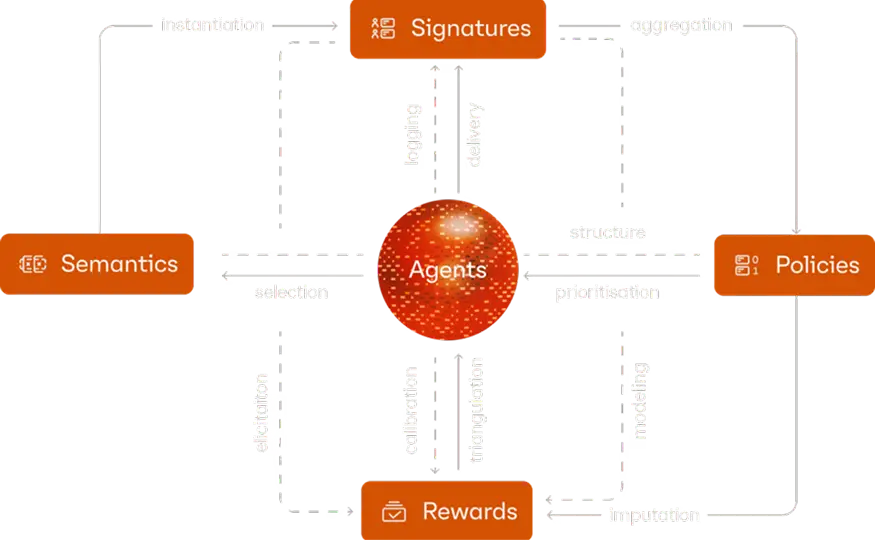
The building blocks of Agentic AI
Surrogates

Translate every user action — from taps to searches — into measurable progress toward long-term goals, so learning never waits for a final conversion.

Embeddings

Compare behavior to both immediate and historical baselines to infer whether change came because of the agent’s action, not merely after it.

Semantics

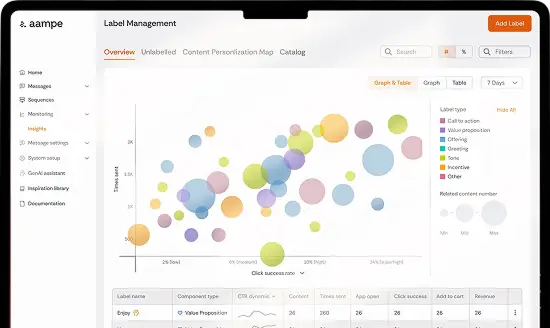
Group messages into conceptual categories — like tone, value proposition, or incentive type — so agents can reduce experimentation complexity, reason by analogy, and transfer lessons learned.

Policies

Balance exploration and exploitation by sampling from experience-based probability distributions, guiding each decision under uncertainty in real time.

Together, these let agents act as an extension of your human teams: experimenting, collaborating, and continuously learning at scale.

Impact

Measurable effects from Agentic AI evolution

Individual Intelligence

Agents learn each person’s unique mix of content, channel, timing, and even preferred recommender system — tuning every experience to the individual.

Rich Discovery

Agents build a shared semantic map of meaning, helping users find what matters without friction. Discovery becomes a dialogue, not a search.

Augmented Teams

Each agent acts as an autonomous teammate, extending human creativity and strategy. Teams see up to 75% fewer messages sent, higher conversions, and 100× more experiments per day.

Active Engagement

Agents meet users where they are — anticipating needs, adapting tone and timing, and adding value in every interaction. Real usefulness drives real engagement.

The Future of UX

Adaptive
Architecture

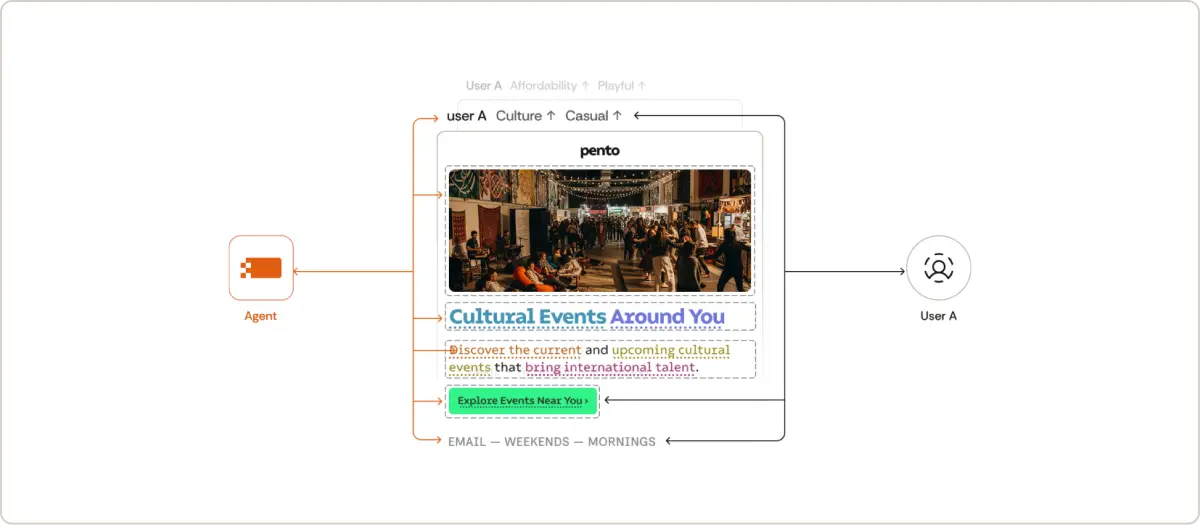
Agents select tone, content, and recommender. User response feeds back into the product instantly. The app is no longer a static store. It’s a living system, bending itself around each individual.
Yesterday
Rules Campaigns
Static Funnels
Today
Faster orchestration along the data pipeline: optimizing delivery, not understanding
Future
Agentic infrastructure: vertical connection between people and products, where systems learn, adapt, and converse in real time across Product, CRM, and Data
FAQ

Your Questions,
Answered

Still have questions? Contact our experts ›
Do I need "the basics" set up before I use Aampe?

No. Aampe *is* the basics (plus a whole lot more)! For example, you don't need to have user journeys set up before we can optimize. In fact, our customers don't set up user journeys at all! We achieve individualized personalization through the actual messages you send, so you don't need any formal messaging structure to get started. You only need a CPaaS connection so we can send message and a CDP connection so we can track impact.

Set up is a snap: Add your CDP and CPaaS API keys, set your goals, and you're ready to start writing!

Does Aampe replace my current CRM platform or CPaaS provider?

It doesn't have to! Aampe can work right alongside your current CRM platform or CPaaS provider, making them function better by producing much better results more efficiently. With a simple API connection, you can enable new levels of messaging personalization without having to spend time and effort building rigid segments and static, over-generalized user journeys.

Aampe doesn't need a large number of users to operate. We have apps with fewer than 10,000 users already seeing impressive results. If you write quality messages, we can use them to engage an audience of any size.

Not at all. Aampe will pull the relevant event data from the service you've instrumented your app with so the effort on your engineering team is kept to minimum.

You can share data with Aampe using a dump into a storage bucket (AWS, GCP, Azure, etc.), via SFTP. For more details refer to our Integration Guide. Cannot find your preferred method for data sharing? Let us know and we'll be happy to figure it out with your team.

There are a couple of options here. The preferred option is that an Aampe engineer installs the app on their test device (either from the store or using an APK). In that case, Aampe does all testing needed. In the cases where this is not possible, the alternative option is that you provide Aampe with a few user IDs either from your team or your test devices, and testing will be done in collaboration with your team.

Does Aampe require static segmentation?

No. Aampe uses semantic content labels and per-user learning rather than relying on broad predefined buckets.

No. The internal materials position Aampe as learning across multiple horizons and using reward functions to connect short-term signals with longer-term outcomes such as retention, revenue timing, and sustained engagement.

Aampe learns from real user behavior using tagged content, reward signals, abstraction layers, social calibration, and next-best-action policy selection to update what each agent believes from real user behavior.

No. Aampe relies primarily on real-world experiments, then uses machine learning to collect, generalize, and apply findings faster. We also use AI to support or perform tasks like writing copy, organize, and draw insights from user behavior, and identify messaging impact. Our hybrid approach of using both experimentation and machine learning avoid many of the common pitfalls of a naive ML approach.

Aampe frees your data science team to work on more productive things. Instead of bogging them down with requests for reports or messaging A/B tests, they can spend their time running more valuable analyses, doing the kinds of work that only they can do.

Absolutely! Aampe runs many of the tests and reports that a typical data science team normally would. Now apps of any size can have the same capabilities as the big guys.

Absolutely not! Even with Aampe running, you're still able to add or remove messages, constrain messages to certain time windows, send ad hoc messages, or even stop sending messages entirely.

Of course! (Although most of our customers report needing to send fewer ad hoc messages after starting with Aampe.) While Aampe is running, you can still send individual messages from your current customer communications platform.

We sure can! Aampe is designed to help you build a messaging library of thousands of unique and instrumented messages in minutes in a Bring Your Own Model approach. Check out how it works.

Does Aampe just help with sends and clicks, or can it help with mid and bottom of the funnel actions too?

Aampe helps with much more than clicks! One of the first steps of using Aampe is setting your goals. These may be any user action that you're able to track — anything from clicks to sessions to conversions — and, once they're set, Aampe optimizes for these goals.

Why should I trust Aampe's product and technology?

At Aampe, our answer will never be "Just trust us." In fact, we hate the "black box" mentality so much, we've gone to great lengths to explain how our system works for non-technical users, and we've even written a detailed whitepaper to explain our system to technical users! If you have any questions, please reach out! We love talking about how we make personalization better.

Continuous intelligence for customer engagement

Move beyond campaigns.
Let agents optimize every
interaction.