
Message Catalogs on Aampe
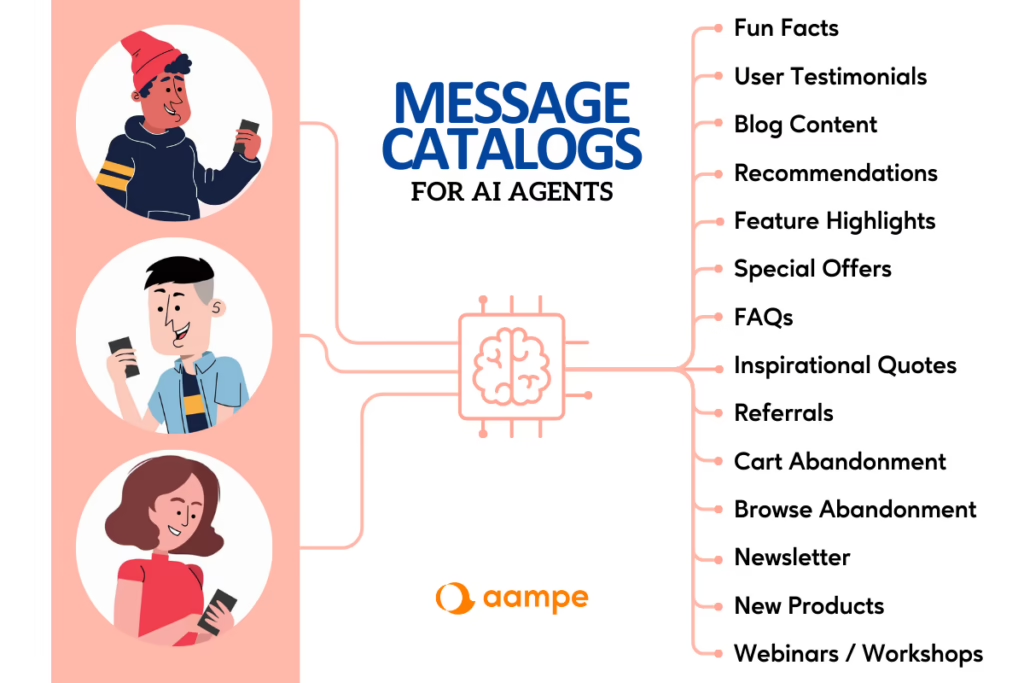
Traditional messaging campaigns, whether email, SMS, or push notifications, are designed to target specific user segments created based on arbitrary rules. Those rules are declared based on one’s intuition and limited understanding of their audience’s diverse preferences and needs. Moreover, teams have no choice but to rely heavily on industry benchmarks to predetermine the best […]
The Fluid Dynamics of Message Personalization
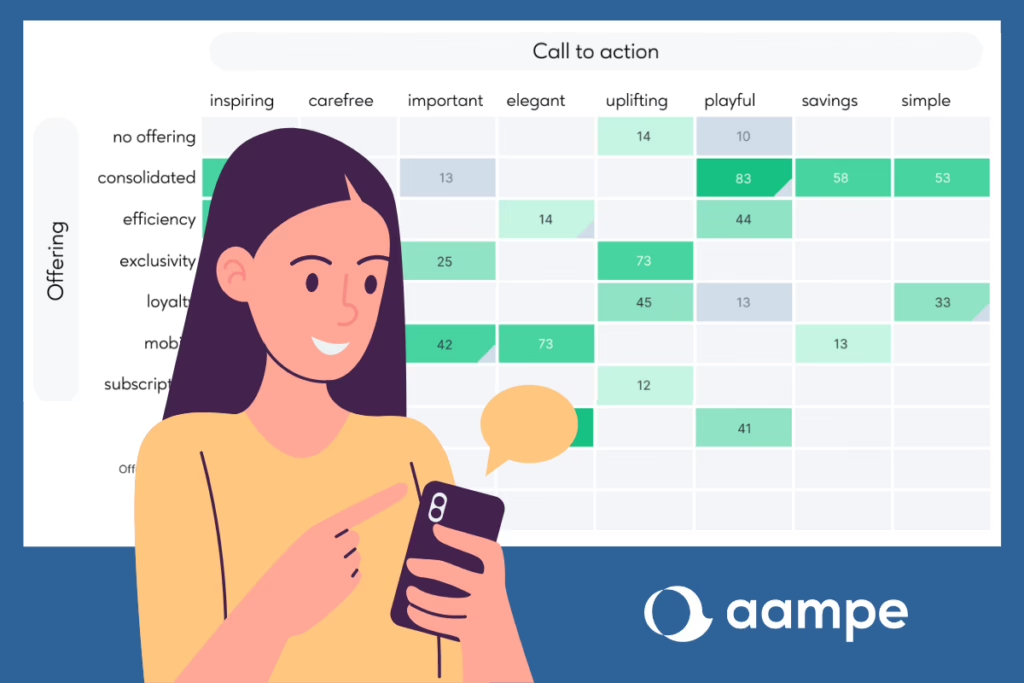
Over the weekend, I had some neighbors over for a barbecue. One of them works in computational fluid dynamics, and as we chatted about his work, something clicked with some refactoring we’ve conducted recently at Aampe. He explained that in his field, the cost (both in computational complexity and actual dollars) of observing real-world fluid […]
Optimized Messaging with Learned Weights and Beta Distribution
AI agents and tagged weights Agentic learners encode their learnings as tagged weights. At Aampe, for example, we start a new customer’s agents with 35 timing tags: five three-hour increments (covering waking hours) over seven days of the week. Each agent updates the weights for each tag based on the way its assigned user responds […]
Adaptive Recommender Systems: A Bandit Approach
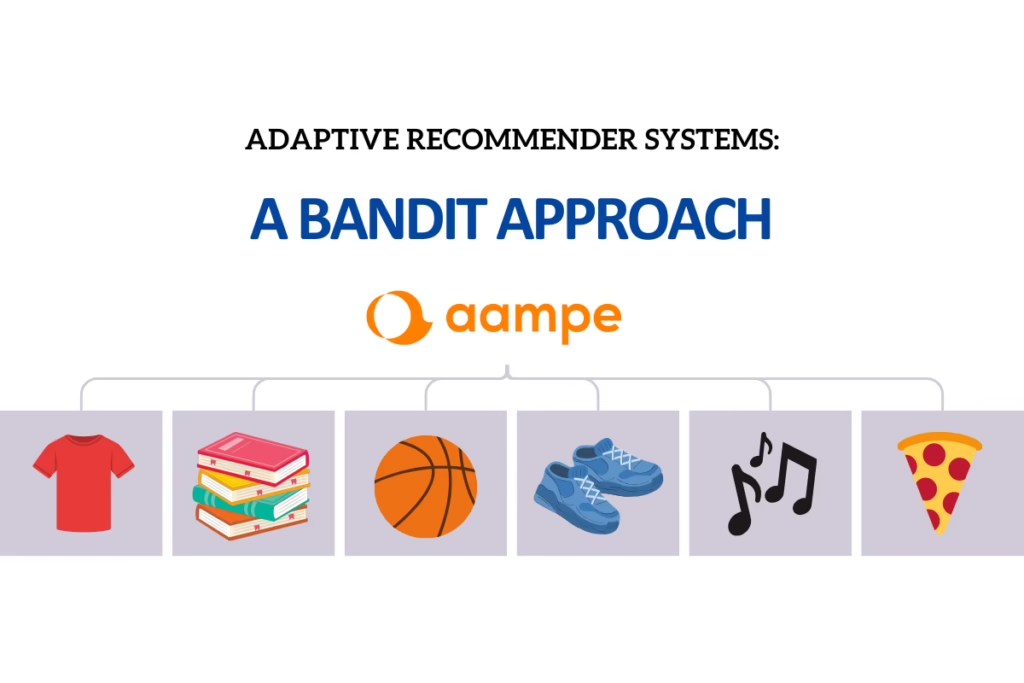
Recommender systems are arguably the highest value category of applied machine learning. Netflix presents entertainment viewers want to watch. Spotify recommends music listeners want to hear. Google retrieves websites users want to visit. Amazon shows products customers want to purchase. The algorithms beneath these decisions create enormous enterprise value because without them, users could not […]
How is Aampe different from AI segmentation tools?
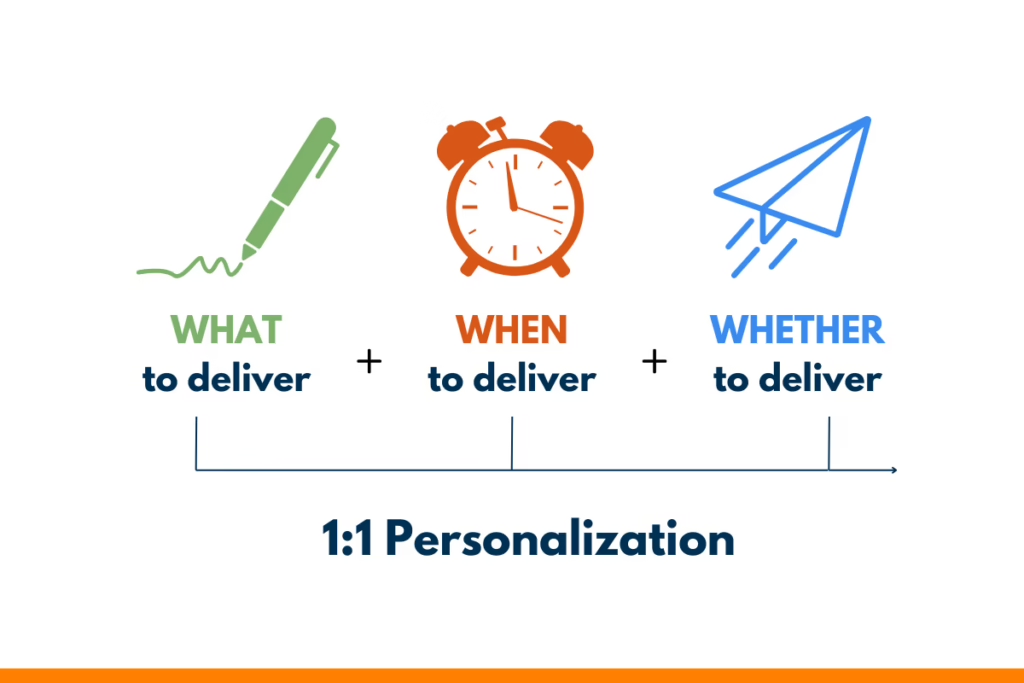
Introduction What is AI segmentation? Ask your favorite search engine or LLM and I bet the answer is a mishmash of the words “algorithms”, “machine learning”, “artificial intelligence”, “automatic”, and “dynamic”. More importantly, you’re unlikely to find a simple explanation of how AI segmentation works and how it differs from traditional segmentation. This article will […]
What Is an AI Agent? Definitions, Inputs, and Outputs
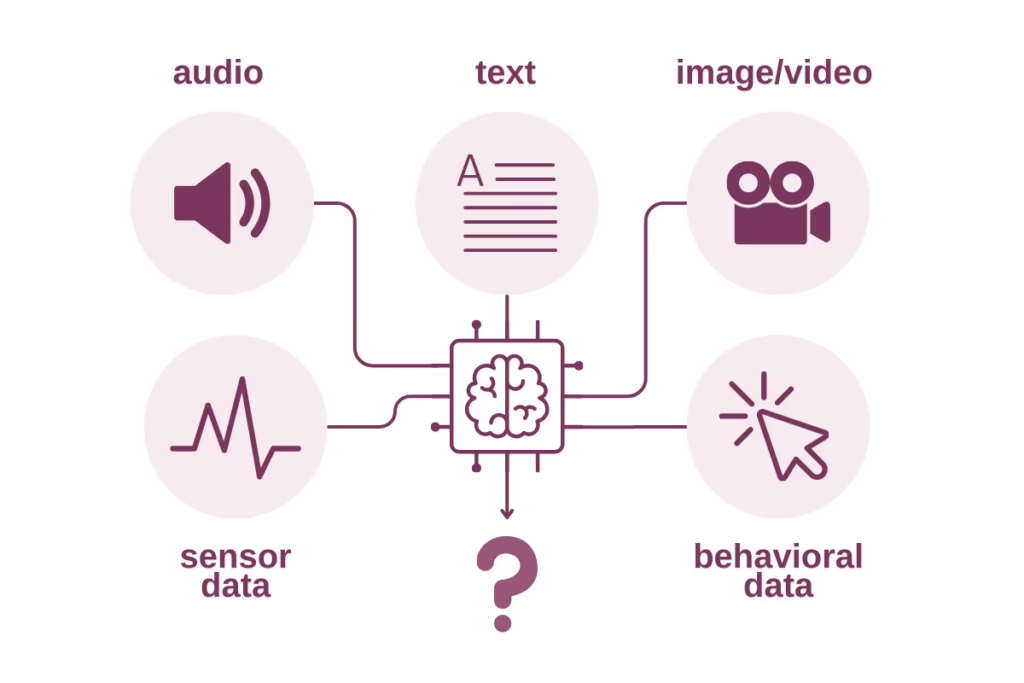
Agentic tools—both software and hardware that leverage AI agent technologies—are transforming every industry. It’s not something that will happen in the near future; some industries, particularly automotive, have been experiencing it for years. Unlike what the name suggests, a self-driving car doesn’t drive itself but is driven by an agentic system that performs a series […]
Theory Ventures: Billions-scale personalization with AI agents
Billions-scale personalization with AI agents: Our investment in Aampe The most successful products in the internet age have all been built around personalization. Tiktok’s feed, Netflix’s recommendations, and Spotify’s discovery playlists are so powerful because they provide truly unique experiences for billions of different people. For most businesses, the most common interaction they have with […]
There Is No Cake

The Sweet Illusion of a Feature Sprint In every development cycle, there’s a moment of clarity—a fresh feature, well-defined, ready to be built. At the start, it looks simple, digestible. A piece of cake. As engineers dive in, that cake gets eaten. Each commit, each pull request, each problem solved takes a bite out of […]
Managing (Agentic) Expectations: A Case Study in Memory Management

Understanding and working with AI agents is going to be one of the most transformative technological shifts in human history. As humans, we have a long tradition of anthropomorphizing the world around us, projecting human-like qualities onto deities, animals, weather, and even social constructs. Historically, this has often been a flawed exercise, as it imposes […]
Why Agents Can’t Learn from Historical Data: The Importance of Counterfactuals
Agents can’t learn from historical data. They can make assumptions from it, but they can’t learn. Say a user often shows up on Friday between 6–7pm. Does that mean it’s a good time to engage them? No one knows. Because the real question isn’t “When does the user show up?” It’s: “Would they show up more […]