
Navigating User Contexts: Aampe’s Approach to Personalized AI Agents

In a recent post, I wrote that our agents treat each user as their own unique context – they don’t generalize across users. One reader pointed out that zero transfer between users would be impractical for most business contexts, which is entirely correct. My one-context-per-user statement was an accurate portrayal of how semantic-associative agents learn user […]
Reimagining Customer Engagement: Beyond Hierarchical Reinforcement Learning
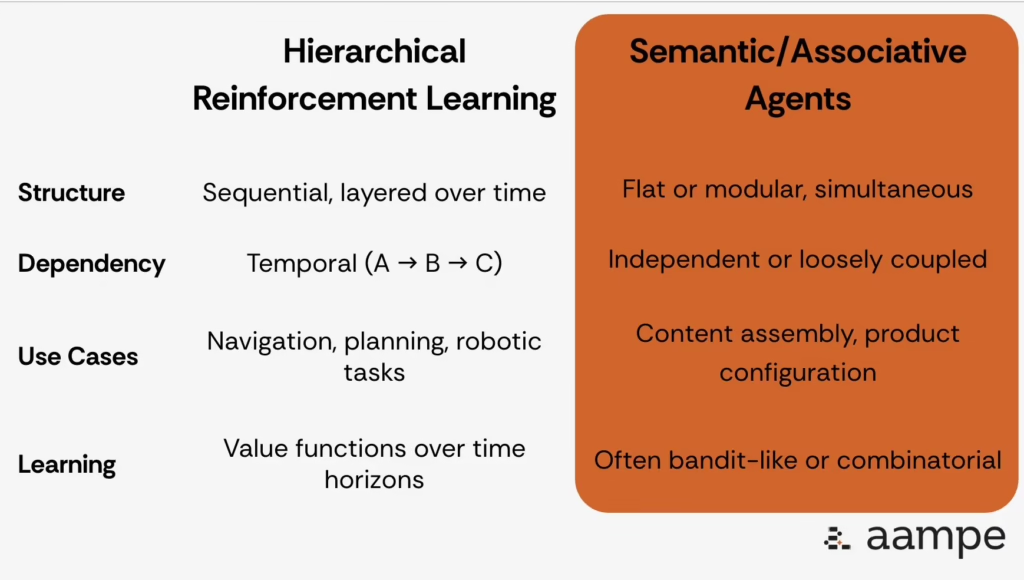
Following up on one of my recent posts about using bandits as the anchor point for how we think about agentic learning: Yes, we’ve stretched the bandit framing well beyond its usual territory — multi-dimensional action spaces, non-ergodic structure, per-user learning – but it’s still a better conceptual fit than alternatives like hierarchical RL. Customer […]
Evaluating Adaptive Systems: Beyond Short-Term Metrics
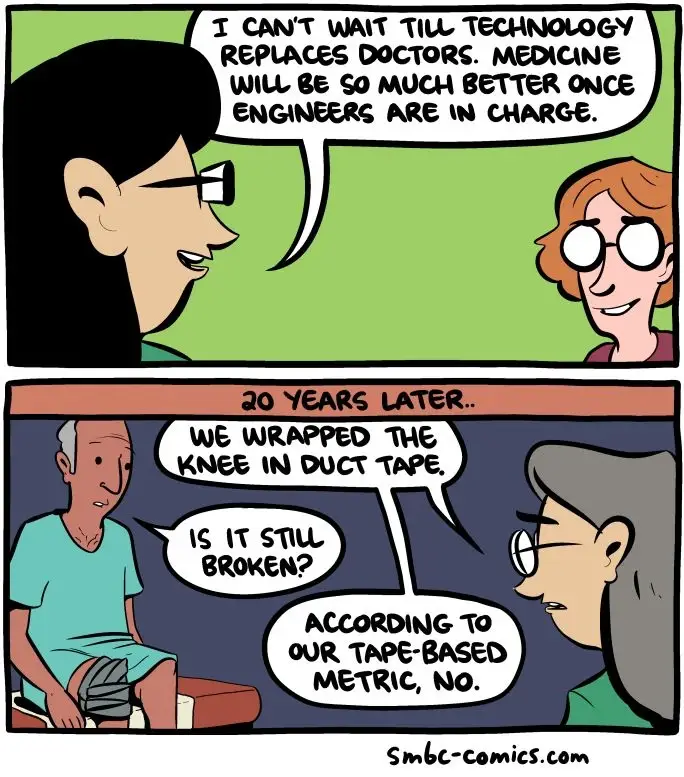
When evaluating an adaptive system like Aampe, the most common question is: “what’s the lift?” It’s an understandable reflex. Lift is easily measurable. With lift numbers, you can compare system A to system B and say, “This one wins.” This is the problem with metrics – we tend to confuse what we can measure with […]
Agentic Architecture in Action: Aampe’s Dual-Path Personalization Strategy
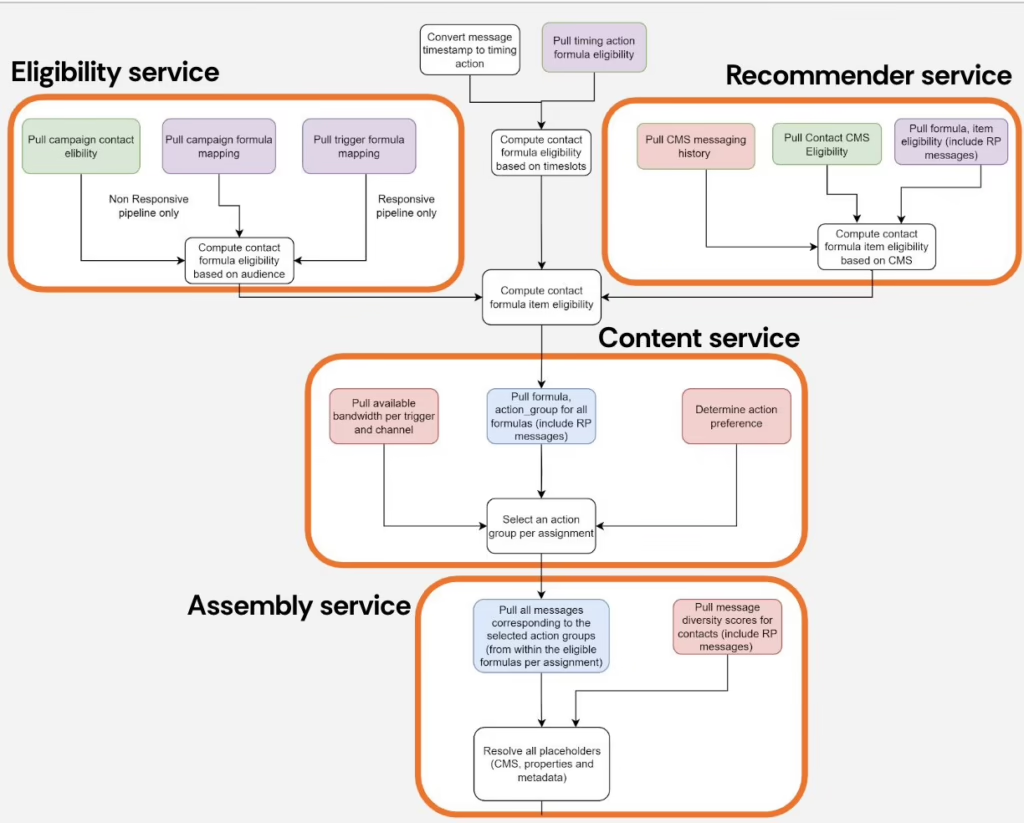
Here is a diagram of our agentic architecture (well, part of it). See the top-right box: “recommender service”? Let’s talk about that. At Aampe, we split copy personalization into two distinct decisions: Which item to recommend How to compose the message that delivers it Each calls for a different approach. For item recommendations, we use […]
Building a Multi-Tenant Event Processing Pipeline: A Dive into Pub/Sub Architecture
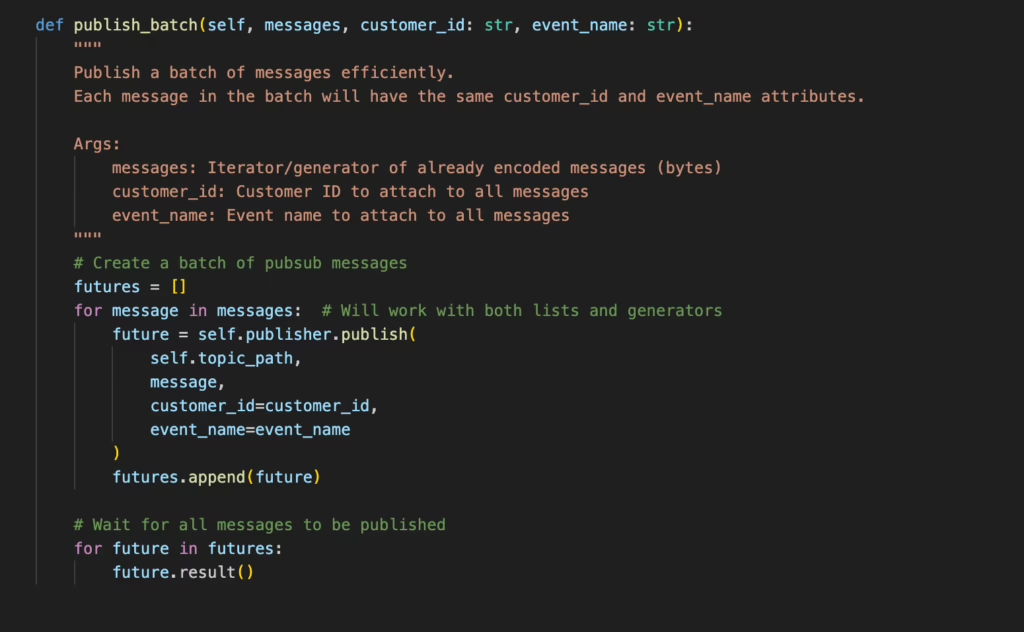
Multi-Tenant Pub/Sub Architecture 1. Topic Isolation Pattern We’ve implemented a sophisticated topic isolation pattern that provides several key benefits: Customer-Specific Topics: Each customer has dedicated publisher topics for events and user properties. Independent Scaling: Topics can scale individually based on customer load. Clear Data Boundaries: Naturally enforces data separation between customers. Simplified Monitoring: Enables easy […]
Understanding Decision-Making in Agentic Systems
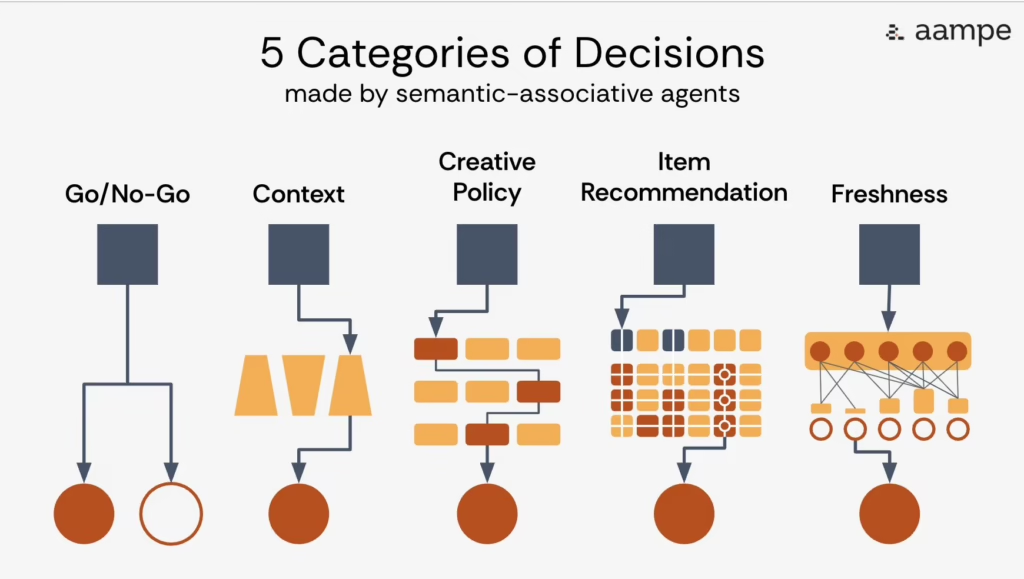
In agentic systems, what counts as a “decision”? That can be a hard question to answer in regards to humans, let alone agents. By some estimates, adult humans make around 35,000 decisions a day. Other estimates put our food-related decisions alone at over two-hundred per day. https://share.upmc.com/2015/07/how-your-brain-makes-food-decisions/ It comes down to what kind of cognition […]
How Aampe’s Agents Use Causal Analysis to Measure Impact Amidst External Messaging
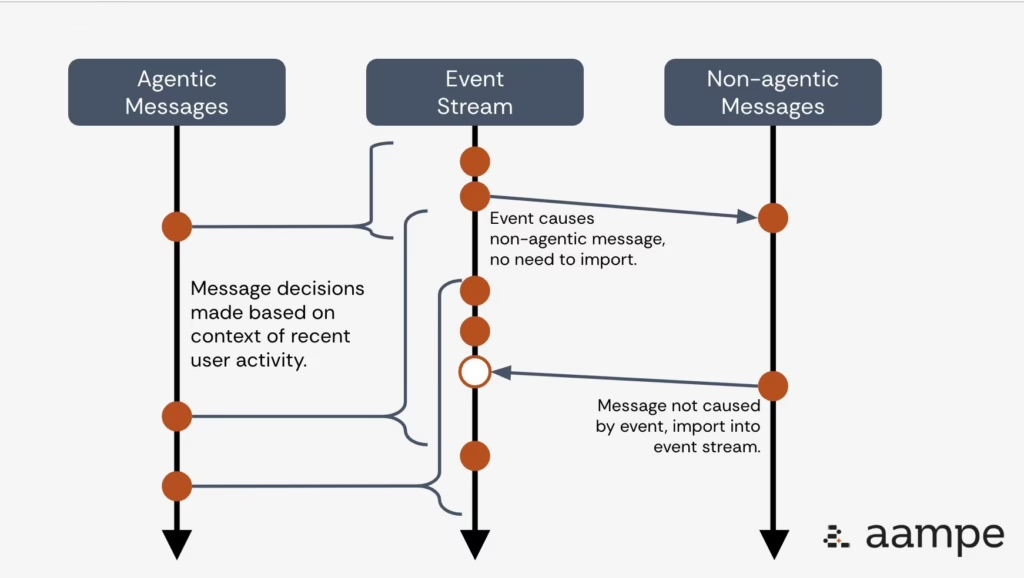
One of our customers asked a great question: If a user is getting messages from systems outside Aampe (this can happen for many different reasons), how can we tell which outcomes were caused by that user’s agent? Wouldn’t those other messages interfere with the agent’s learning? This question points to an important aspect of how […]
MyPostcard expands partnership with Aampe, from campaigns to context-aware experiences
MyPostcard® is building emotional connections at scale — now entering Year 2 with aampe and deepening the partnership with Agentic AI across CRM and product surfaces.Sending a postcard may seem simple. But behind every message is a moment: a memory, a relationship, a feeling you want to make last. For MyPostcard users, the experience is […]
Alignment at Scale Beats Attribution at Aggregate
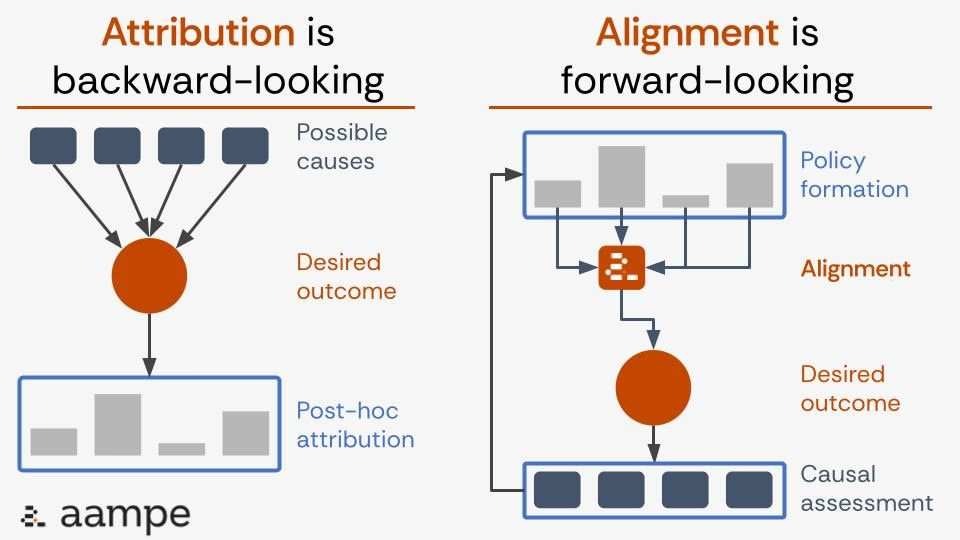
Most of what we call “attribution” in marketing and product work is trying to answer the wrong question. When we see some desirable outcome (more engagement, more conversions, more revenue) we typically try to point to changes made (messages sent, product content delivered) and say *this* caused *that*. The whole notion of A/B testing is […]
Learning, Not Guessing: How Aampe Aligns With Every User
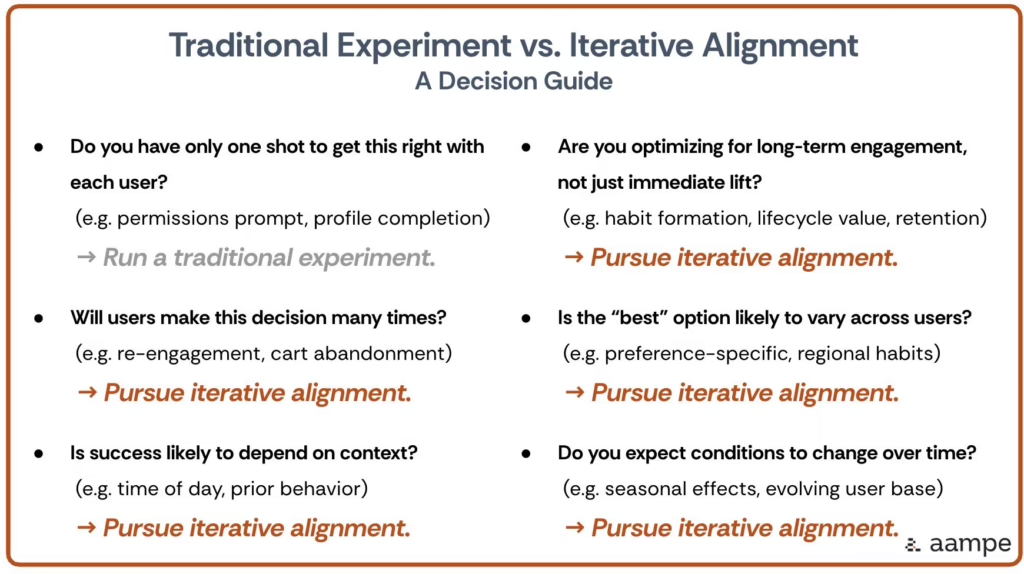
Aampe agents run literally millions of experiments every day, but you rarely hear us talk about experiments. Instead, we talk about learning and alignment. There’s a reason for that. When a system feels stuck – growth slows, re-engagement drops, users aren’t doing the things you built for them – the natural instinct is to search […]